
Experimenting with Coffee

Updated: Jan 5
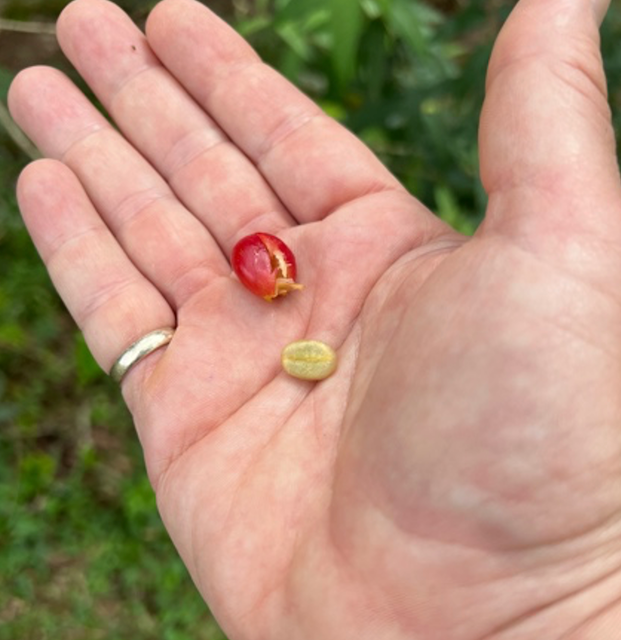
In May/June 2025 the Rainforest Club Team started their efforts to plant coffee. Our previous blog post describes the start of the project. Despite the Brazilian Winter months between May and December with very little rain and colder weather we started our project, growing some seedlings as a test. Today, December 2025, we have been 6 months into the project

Besides planting some seedlings, we expanded our knowledge by reading and learning about planting coffee. For example, we realized that the coffee plants require specific soil composure and nutrients to develop. Favorably well-draining, deep, fertile soil, organically rich, composed of sand, clay and silt. Nutrients should be well balanced for vegetative growth (Nitrogen), cherry development (Potassium) and root & flower development (Phosphorus). Secondary nutrients such as calcium, magnesium and sulfur) as well as micronutrients, zinc, boron & iron are equally essential.
With our first experiment and expanded knowledge we headed into the Brazilian Summer, the perfect time to launch a larger effort to raise seedlings. Dried coffee cherries from our May 2025 harvest, well draining soil and some simple seedling racks were the basics to start this phase of our plantation.

The seedlings are now on their way with the expectation to witness germination
at the end of the Summer (April 2026). Once successfully germinated, we will transfer the seedlings in larger pots with the ideal soil and nutrition to develop into stronger, resistent plants to be moved to the plantation, which will be after Winter, December 2026.
While the seedlings develop, we identified an ideal spot for the plantation. Approximately 1,000 meters above sea level, in the São João part of the Rainforest Club, is the ideal location for the coffee plants—near Casa da Marli and on the opposite incline, as marked in the picture

Until the coffee plants will be transferred to field, the ground needs elaborate preparation: the existing grass "Brachiaria," will need to be eliminated. This grass called the "green concrete" grows aggressively, almost invasively. It was imported into South America from Africa around 1950, to improve cattle farming, boosting beef output. But it also altered tropical ecosystems. Continuous plowing and raking will eventually limit growth of Brachiaria. Enrichment of the cleared soil with humus and nutritions, especially lime, will eventually get the ground ready for plantation.
For now, we will enjoy Summer in Brazil at the beaches, while the coffee seedlings develop.

Comments